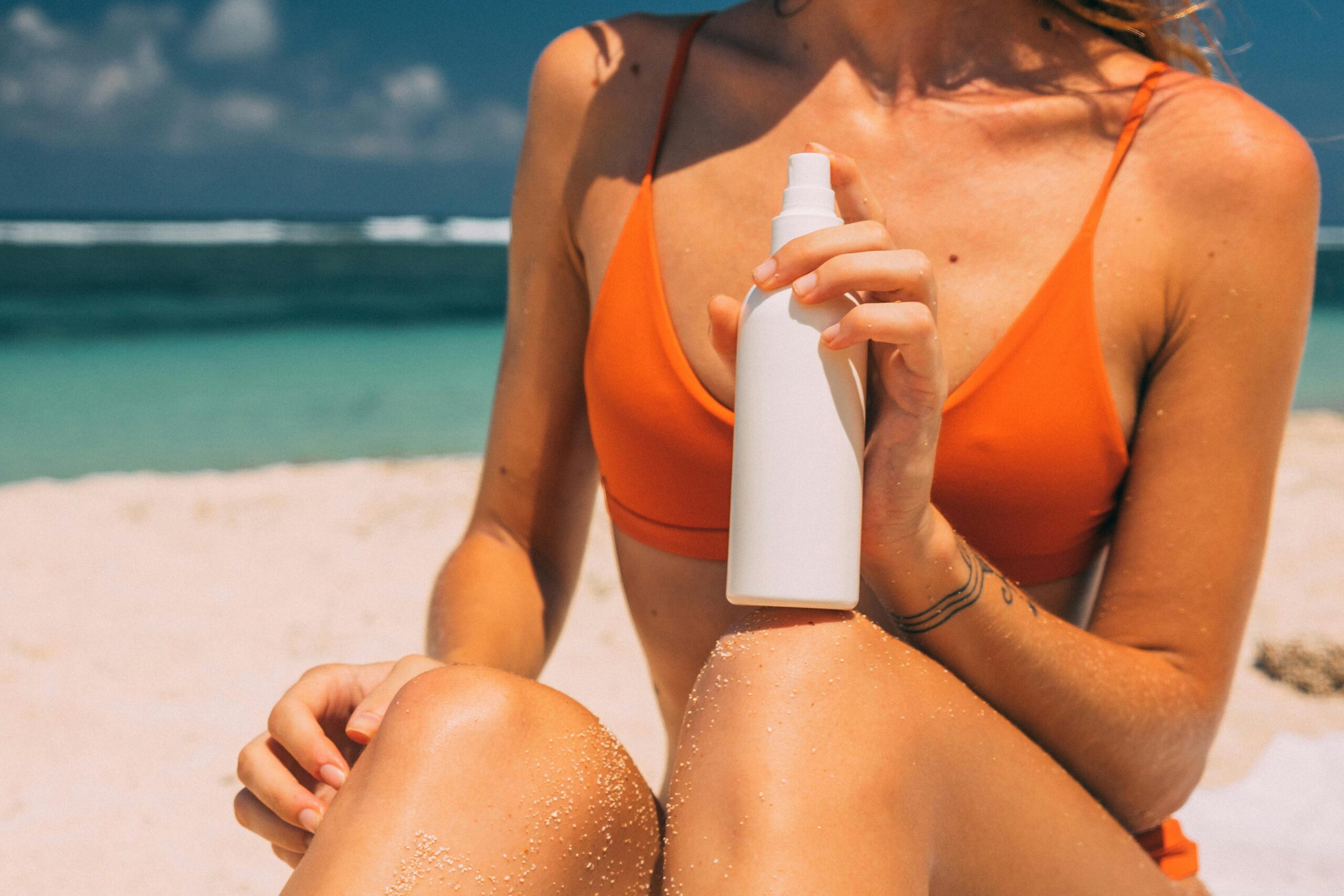
Have you ever been on vacation and thought how life is good and how care-free you are? Something about travelling just tends to make us lower our guard, especially when it comes to sun protection. Maybe you’ve just escaped from a rainy city and want to feel the warmth of the tropical sun on your skin. You want to come home looking sun-kissed.
I get it.
BUT I cannot emphasize enough how sun safety is important, especially on vacation!
Why is it important?
When you’re at home, sun exposure happens when you’re out of the house on errands but on vacation?
You’re outside for hours exploring cities or lying on beaches. You’re having so much fun you forget that the sun’s radiation has been hitting you all day.
Prolonged exposure leads to not only sunburns but also earlier signs of skin aging (wrinkles, hyperpigmentation, dryness, etc), and increases the risk of skin cancer. According to the American Academy of Dermatology Association (AAD), 1 in 5 Americans will develop skin cancer in their lifetime.
That’s one souvenir you don’t want to be bringing home from vacation.

What’s recommended?
The general rule of thumb per the AAD is to go with a broad spectrum sunscreen with an SPF of at least 30.
1. Broad Spectrum Protection
This protects against both UVA and UVB rays.
UVB rays are the main cause of sunburns, which can lead to skin cancer. UVA on the other hand contributes more to skin aging such as wrinkles. Ideally you pick a sunscreen that is broad-spectrum so that you can get protection from both.
2. SPF 30 or Higher
SPF is short for Sun Protection Factor which indicates the level of protection the sunscreen will provide from UVB rays.
To put it into perspective, the following is from the American Cancer Society:
- SPF 15 sunscreens filter out about 93% of UVB rays
- SPF 30 sunscreens filter out about 97%
- SPF 50 sunscreens filter out about 98%
- SPF 100 filter out about 99%.
Personally I try to go a bit higher if I know I’ll be out in strong sunlight for long periods, like when I went on a roadtrip in Iceland.
3. Water Resistance
I definitely recommend this if your trip involves swimming outdoors.
If you’re going to a hotter climate and sweat easily, this is another reason you should get water-resistant sunscreen.
Keep in mind that water-resistant isn’t the same as waterproof so you will still need to reapply it.
4. Physical or Chemical sunscreen?
Without getting into too many nitty gritty details, a physical sunscreen (usually containing zinc oxide or titanium dioxide) sits on top of the skin to reflect the UV rays while a chemical sunscreen absorbs UV rays.
Both are great to use as long as you follow the directions properly, so it really comes down to what feels more comfortable on your skin so that you’ll actually use it consistently.

Sunscreen seems like such a trivial thing to think about for vacation but to me it’s right up there with packing your phone charger and booking your flight. You can’t go without it!